The Transformation of Kun/Peng and the Spiritual Sublimation
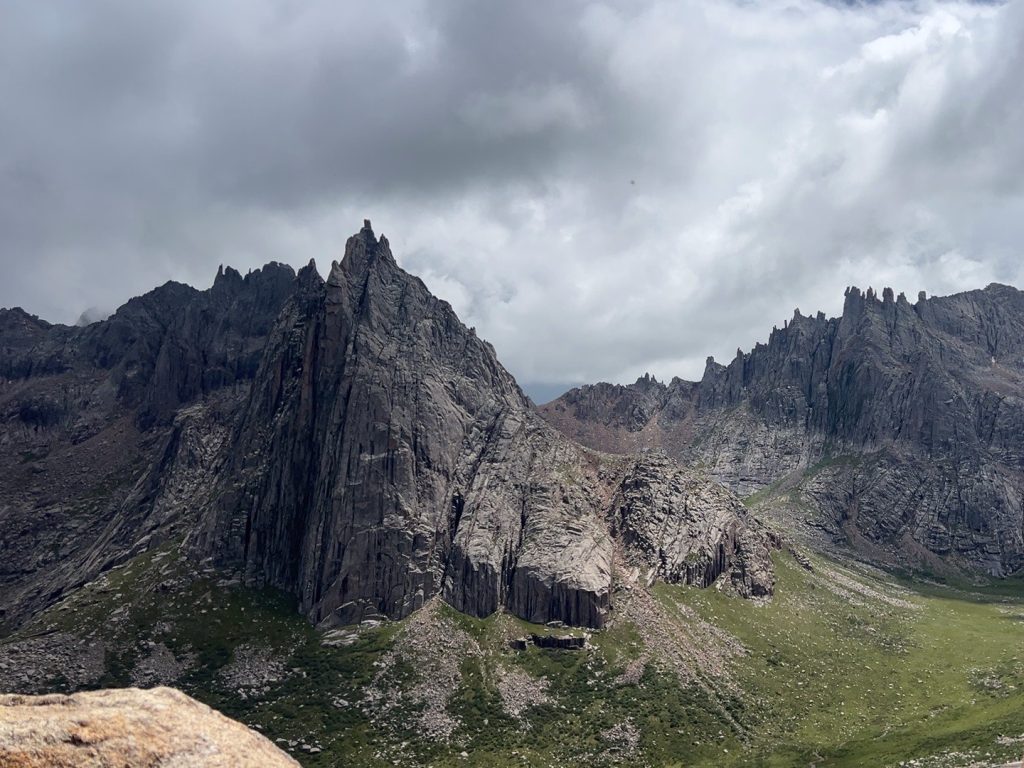
In the Northern Ocean there is a fish, called the Kun, no one knows how many thousand miles in its size. This Kun changes into a bird, called the Peng. Its back is no one knows how many thousand miles in breadth. When it is moved, it flies, its wings obscuring the sky like clouds. When on a voyage, this bird prepares to start for the Southern Ocean, the Celestial Lake……And in the Records of Marvels we read that when the Peng flies southwards, the water is smitten for a space of three thousand miles around, while the bird itself mounts upon a great wind to a height of ninety thousand miles, for a flight of six months’ duration.
The transformation of Kun to Peng is a household story in the “Free and Easy Wandering” of Zhuangzi. Originally the giant fish Kun of the Northern Ocean, it is reborn through the spontaneous workings of nature and becomes the giant Peng soaring in the nine heavens, bound for the other end of the world, the Southern Ocean. In the journey from the Northern Ocean to the Southern Ocean, Kun/Peng attain the fullness of life. Soaring “far removed from the cloudy vapours, bears on its back the blue sky,” the Peng can discern whether the “deep blue of the sky” it once looked up to is the sky’s true color, and whether the vault it once suspected to be “without limit” actually has an end. The transformation and leap in spiritual realm enable the Peng, in a freedom Kun never possessed, to perceive more truths of the world.
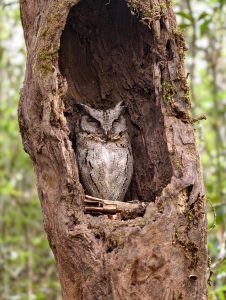
The Peng’s wings, hanging from the heavens like clouds, sweep across the clear sky and cast a giant shadow on the earth. The cicada and the little dove among the elms and sapanwood trees raise their heads in astonishment and doubt, showing incomprehension, doubt, and mockery. “Leaping about among the trees at a height of only a few meters is enough to feel at ease. What is the point of straining to fly so high?” Zhuangzi clearly sided with the Kun/Peng choice and held the little birds’ ignorance in contempt: “What do these two creatures understand? Little understanding cannot come up to great understanding; the short-lived cannot come up to the long-lived.” “The morning mushroom knows nothing of twilight and dawn; the summer cicada knows nothing of spring and autumn.”
Many commentators, ancient and modern, seem to have misread Zhuangzi’s original meaning. Standing on an extreme position of “equalizing things,” they take Zhuangzi’s “these two creatures” to refer to Peng and the little bird, and then conclude that both of them are happy in their own way. “If each is content with its nature, then even the great Peng has no basis to prize itself over the little bird, and the little bird has no envy for the Heavenly Lake. Therefore, although small and great differ, their free and easy wandering is the same” (Guo Xiang’s commentary and Cheng Xuanying’s subcommentary, Zhuangzi Zhushu, juan 1). Yet such an interpretation may confuse certain basic concepts. Zhuangzi’s “equalizing things” is formulated in terms of existence and essence; whether one is free and easy, by contrast, is indeed bound up with the height of one’s spiritual realm. The gulf between realms makes for a difference in the size of the freedom one can possess, and the dimensions one can reach naturally differ as well.
Modern people seem quietly to conflate these two unrelated matters as well. When we loudly proclaim the equality of all beings, we are often not stressing the equality of existential value but dissolving distinctions of thought, spiritual realm, and capacity. An extreme cultural relativism declares that every way of life can be joyful in its own way, and then seeks to deny the desire for higher civilization and broader freedom. A momentary inner calm conceals the self’s loss of bearings; but false serenity always dreads a return to reality. Here “equalizing things” becomes a phrase by which the little doves rationalize themselves, rather than a noble idea truly grasped and practiced. In the life of information cocoons, hypocritical self-consolation tightly enfolds us, until at last the cry of “equality” becomes a lazy and arrogant excuse, and the ardent gaze toward the stars is extinguished by ignorance and folly. Yet, as Zhuangzi originally intended to say: in the existence of life, the all things are non-dual; in spiritual realm, high and low are naturally distinct.
Perhaps we have again reached the time to return to Zhuangzi’s original intent and strive to transform Kun into Peng. The pursuit of a more exalted spiritual realm never needs to justify itself through tortuous and roundabout self-proof.