The Tree Nobody Cut Down
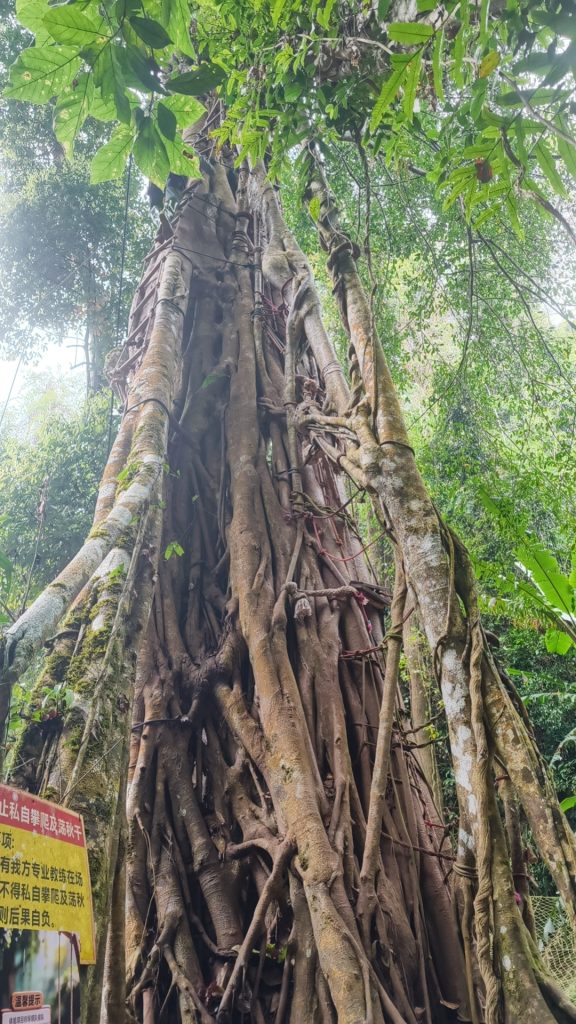
Two thousand years ago, a Chinese philosopher told a story about a tree so enormous that its shade could shelter thousands of cattle. Everyone stopped to admire it — except one man.
“It is a useless tree,” the carpenter said. “And that is exactly why it has lived so long.”
The story comes from the Zhuangzi, a foundational text of Daoism written around the fourth century BCE. Its central question has never been more urgent than it is right now.
The Carpenter and the Tree
A master carpenter named Shi was traveling with his apprentice when they came upon an oak tree of staggering size — its trunk so massive that dozens of people, arms linked, could barely encircle it. Crowds gathered beneath it, marveling.
The carpenter walked straight past.
“Master,” his apprentice panted, catching up, “I have never seen timber this magnificent. Why didn’t you stop?”
“It is a useless tree,” the carpenter said. “Make a boat from it and it will sink. Make a coffin and it will rot. Make furniture and it will fall apart. Make doors and the wood will weep resin. It is good for absolutely nothing. And that is precisely why it has grown so old.”
Every tree that could serve a purpose had been cut down long ago. The pear trees, the orange trees, the cypress — all useful, all gone. This tree had survived not despite its uselessness, but because of it.
The Dream
That night, the tree came to the carpenter in a dream.
“You compare me to those useful trees?” it said. “The orange trees, the pear trees — the moment their fruit ripens, it is torn from their branches. Large limbs broken, small branches stripped. Because they are useful, they suffer their entire lives and die before their time.”
Then it said something that stopped the carpenter cold:
“I spent years learning to be useless. I nearly died for it, more than once. Now I have finally achieved it. And this uselessness — is my greatest use.”
The tree did not happen to be useless. It did not grow crooked by accident and stumble into survival. It chose this path — and the choosing nearly killed it. Zhuangzi is not describing a tree that failed to be useful. He is describing a tree that succeeded at being useless.
What Uselessness Actually Means
The word “useless” misleads us. In modern English, it carries the weight of failure. But the tree in Zhuangzi’s story is not broken — it is the largest, oldest living thing on that road. What Zhuangzi means is closer to unusable by others: it could not be harvested, processed, sold, or consumed. And in that freedom from external demand, it found the space to become fully itself.
The fruit trees are not villainized. They are not wrong for bearing fruit. But their usefulness became the instrument of their destruction — the moment they produced something the world wanted, the world came and took everything.
Zhuangzi’s insight is not a call to do nothing. It is a warning about a specific trap: the belief that your value is determined by what you produce. The carpenter initially saw only timber — good or bad, useful or useless. The tree’s dream shattered that framework and introduced a third category: a life that exists for its own sake.
The Practice of Letting Go
Zhuangzi was not alone in this insight. Centuries later, a Daoist cultivation text called the Zuowang Lun — the “Treatise on Sitting and Forgetting” — codified a seven-step path for quieting the mind. Its fourth step is called Jian Shi: “Simplifying Affairs.”
The idea is deceptively simple. Most of what fills your day is not essential work. It is performance — the constant, exhausting demonstration that you are busy, productive, needed. Jian Shi asks you to separate the two. Not to do less, necessarily, but to stop doing things in order to prove that you matter.
You can try this tonight. It takes five minutes, and it requires nothing but honesty.
Tonight’s Practice
Lie down. Close your eyes. Let your body settle into stillness.
Recall your day. Think specifically about the things you did today to prove you were useful. The extra task you took on not because it was needed, but because you wanted to be seen doing it. The email you answered immediately not because it was urgent, but because fast responses make you feel valuable. The opinion you offered that nobody asked for — because staying silent felt like admitting you had nothing to contribute.
Name two or three of these moments. Hold each one in your mind for a few seconds. Don’t judge them. Just see them clearly.
Say to each one, silently: “Tonight, I don’t need to be useful.” You are not saying you will never be useful again. You are saying that right now, in this bed, in this moment, you have nothing to prove.
Allow yourself to be like that tree. Bearing no fruit. Serving no purpose. Proving nothing to anyone. Just here — present, breathing, alive.
Notice what remains. When you strip away the performance of usefulness, what is left is not emptiness. It is you. Undiminished. Unbroken. Whole.
Most people who try this discover something surprising: the things they did to prove their usefulness were not, in fact, the most important things they did that day. The important things — the conversation they lingered in, the walk they took for no reason, the moment they sat quietly and watched the light change — those were the moments when they were most fully alive. And those are exactly the moments that feel, in the accounting of productivity, like wasted time.
Uselessness is not failure. It is freedom from the prison of having to prove yourself.
The Tree Is Still Standing
The story ends where it began — on that road, beside that tree. The carpenter woke the next morning and looked at the oak with different eyes. What he had dismissed as worthless timber, he now recognized as something rare: a life that had refused to be measured by the standards of usefulness — and had thrived.
The fruit trees that lined the valleys of ancient China are long gone. The timber that built the palaces of Qi has rotted and been replaced a hundred times over. But in Zhuangzi’s telling, that useless tree — the one nobody wanted — was still standing when he wrote his book. And his book is still being read, twenty-three centuries later, by people who are tired of having to prove they matter.
You do not have to bear fruit to be worthy of standing. Your existence is not a performance that requires an audience. Sometimes the most radical thing a person can do is simply remain — rooted, unhurried, unafraid of being useless.
Further Reading
Zhuangzi, “In the World of Men” (Ren Jian Shi, Chapter 4) — the original story of the carpenter and the useless tree. Also found in “Free and Easy Wandering” (Chapter 1) in a shorter variant.
Zuowang Lun (Treatise on Sitting and Forgetting), Step 4: “Simplifying Affairs” (Jian Shi) — the seven-step meditation manual attributed to the Shangqing tradition. The “Simplifying Affairs” step provides the philosophical underpinning for the night practice described in this article.
This article explores philosophical ideas from classical Daoist texts. It is not a substitute for professional mental health support. If you are experiencing persistent anxiety, burnout, or emotional distress, please consult a qualified practitioner.