Let all things be as they are
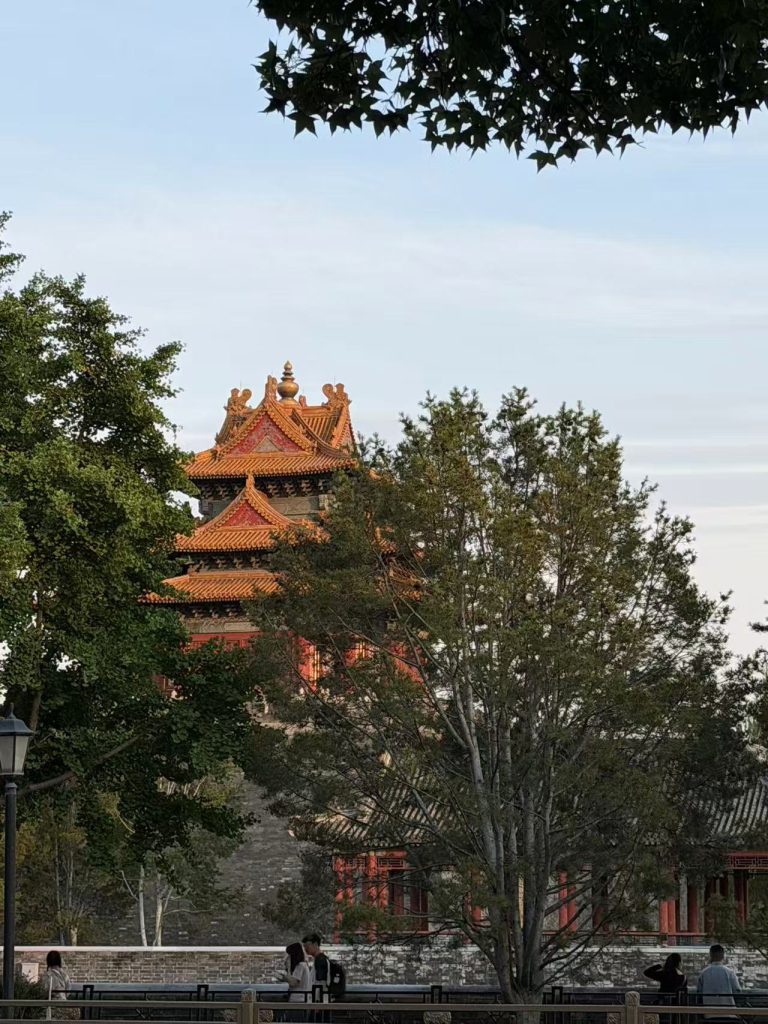
Chapter 23 of the Daodejing says:
Abstaining from speech marks him who is obeying the spontaneity of the nature. A violent wind does not last for a whole morning, and a sudden rain does not last for the whole day. To whom is it that these (two) things are owing? To Heaven and Earth. If Heaven and Earth cannot make such (spasmodic) acting last long, how much less can human!
Simplicity and calm are closest to the nature. Between Heaven and Earth, a violent hurricane often cannot sustain itself for a single morning, and a sudden torrential rain generally does not rage for a whole day. Wind and rain are governed by Heaven and Earth, if Heaven and Earth cannot carry vehemence and radicalism through to the end, how can the rash and impatient actions of little humans endure? “Humans model themselves on Earth, Earth on Heaven, Heaven on the Dao, and the Dao on itself.” Heaven and Earth tend toward balance and mildness and draw near the great Dao; humans, too, should emulate Heaven and Earth and attain true union with the Dao through sparse speech and non-action.
A similar principle is restated in the immediately following Chapter 24 of the Daodejing “he who stands on tiptoe does not stand firm, and he who strides cannot go far.” To stand on tiptoe may elevate one for a time, but one cannot stand long. To run with great strides may be fast for a time, but one cannot reach far. These are “leftover food and superfluous forms,” which all people detest, “one who has the Dao does not dwell do these.”
In an age that esteems efficiency, stimulation, drastic change and passionate excitement, how many people are chasing instant rewards by “standing on tiptoe” and “striding,” forgetting that deep accumulation, measured release and steady advance are the foundation for standing unshaken. Thus familiar scenes rise before our eyes one after another: overdrawing health to win promotion and a raise, enduring anxiety and depression in a position where “the high places are too cold to bear;” chasing the latest hot opportunity with wolf-like and eagle-like ruthlessness, staking one’s life on the gamble of sudden wealth, only to end in utter defeat; pursuing beauty through extreme dieting and seeking health and strength through unrestrained exercise, only to have results run counter to one’s wishes, reaping instead a withered countenance and damaged limbs……We often attribute one failure to the deficient ability, weak resolve, or insufficient strength of aspiration, yet forget that these rash and impatient actions themselves violate the natural way that “a whirlwind does not last out a morning” and the human instinct behind “he who stands on tiptoe does not stand firm.”
Clamorous excitement comes on fiercely, yet vanishes in an instant. The essence of rash and impatient action is to overdraw physical strength, spirit, timing, and fundamental creativity. Under the iron law of cause and effect, it inevitably ends in abandonment halfway and more loss than gain. A momentary intensity can produce short-term effects, but a journey of ten thousand miles that is to last and last can rely only on a calm rhythm attuned to one’s nature. The prescription the Daodejing offers for this remains as simple and plain as ever: lower the heels raised on tiptoe and slow the radical pace. Long-term development cannot depend solely on lofty sprints, the steady advance of a heart at peace, day after day, is the foundation for settling oneself and establishing one’s life. What Heaven and Earth teach is not how to be faster, but how to last longer. The violent are brief; the calm endure. Those who overdraw through radicalism decay quickly, those who preserve and accumulate steadily continue. In the final analysis, what we lack and call for is the patience and steadfastness to apportion our strength evenly across the years. We do not need deliberately pursue tiptoeing and striding, and the growth in accordance with our nature will naturally fulfill our dreams.